
Nexus Project updates: Spring 2026
Biochar Field Application | Corn Field Trials
This spring, the Nexus team is evaluating corn ear yield to assess the impact of biochar-based treatments on crop productivity using a randomized complete block design and replicating treatments across field blocks to account for spatial variability. Treatments included a commercial biochar (WF), a farm-produced biochar (DN), a compost-only treatment (CMP), and an untreated control. Data were analyzed using linear mixed-effects models with treatment as a fixed effect and block as a random effect.
In the first year, differences in corn ear yield among treatments were modest. This aligns with the expected behavior of biochar amendments, which typically produce gradual improvements in soil systems rather than immediate yield increases.
Tissue analysis revealed no significant differences in aboveground nitrogen. However, root nitrogen concentration was significantly affected by treatment (p = 0.0048), with compost-only treated crops showing a significantly higher value than the untreated control crops while DN and WF crops showed non-significant increasing trends relative to the control crops.
These findings indicate that early responses to soil amendments may occur below ground before becoming visible in crop yield. A second year of field trials is currently being prepared, including the integration of a cover crop (radish) to enhance nitrogen cycling.
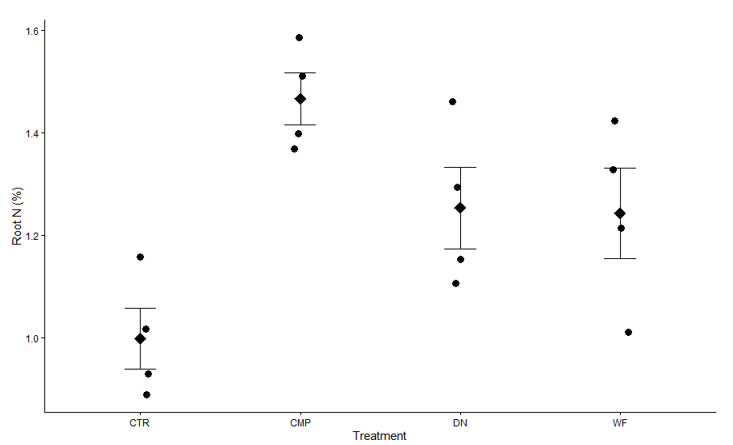
Figure 1. Root nitrogen concentration (%) across treatments in the corn field trial.
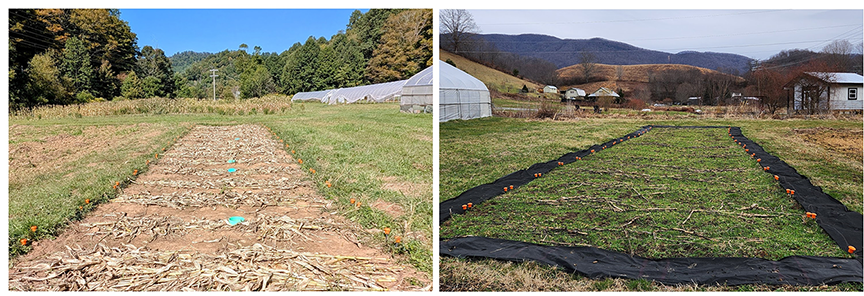
Figure 2. Cover crop establishment in the trial field following corn harvest. Residual corn biomass was chopped and left on the soil surface to decompose in place, supporting nutrient cycling and soil health.
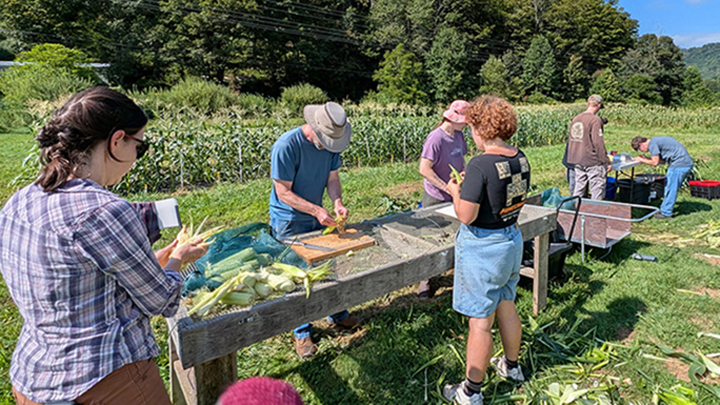
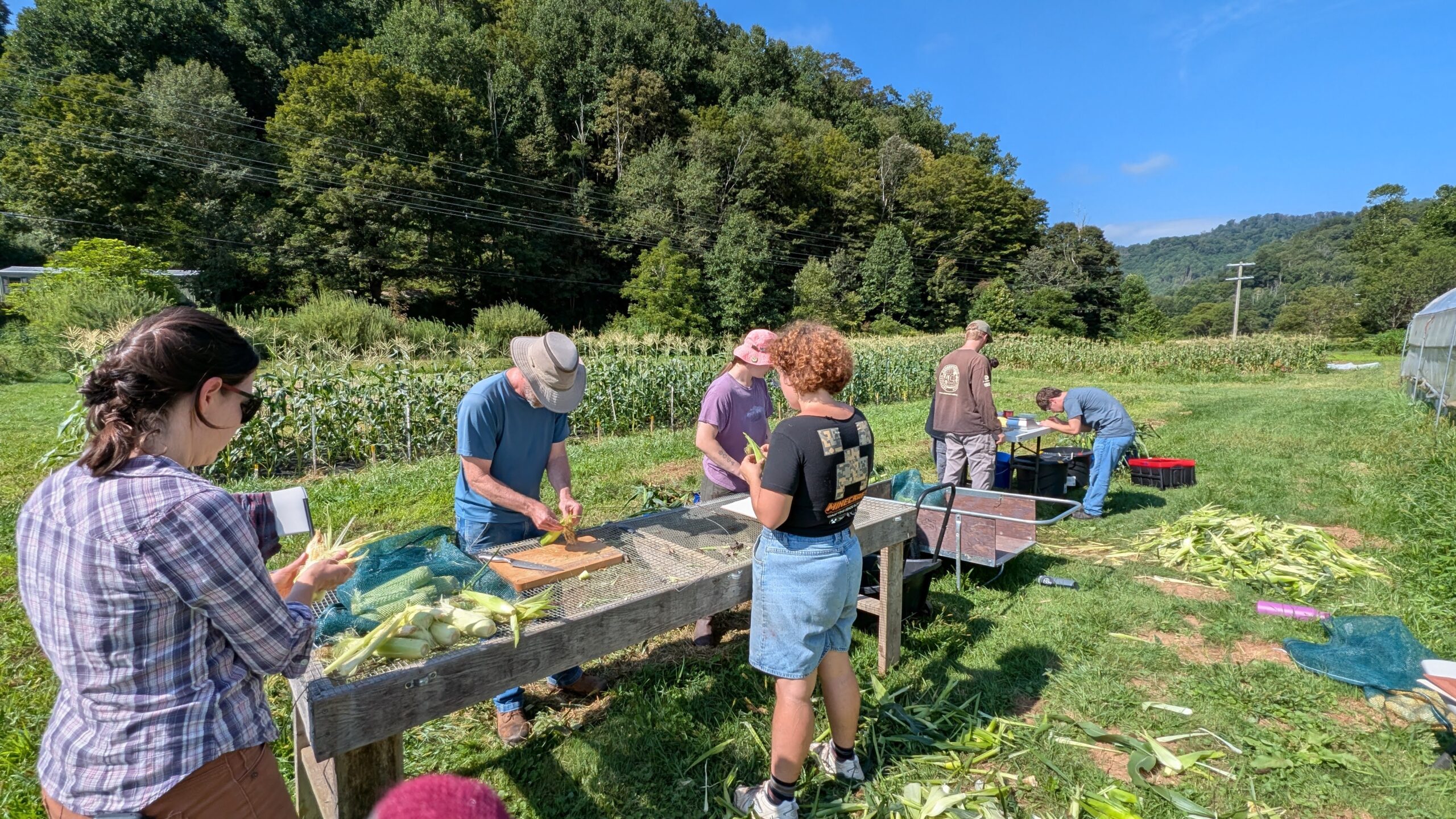
Figure 3. Corn harvest day in the field trial. Marketable ears were counted, weighed, and measured to assess yield and crop quality.
Biochar Co-composting in 65-Gallon Tumblers
Adding biochar influenced nitrogen transformations during composting and appeared to shape the maturation process. Composting was conducted in 65-gallon tumblers, with samples collected during the curing stage to monitor inorganic nitrogen and C/N ratios.
In the control compost, total nitrogen concentration and nitrate (NO₃⁻) declined over time, suggesting ongoing stabilization and potential nitrogen losses. In contrast, biochar-amended treatments showed increased nitrate levels, particularly in the 5% biochar treatment, indicating enhanced nitrification during curing.
Ammonium (NH₄⁺) decreased across all treatments, with a more pronounced decline in biochar-amended composts, further supporting active nitrogen transformation. While initial C/N ratios were higher in biochar treatments due to added carbon, they decreased over time, whereas the control showed an increase.
Overall, these results suggest that biochar can promote nitrification, improve nitrogen retention, and support a more favorable compost maturation process. Ongoing trials are evaluating additional biochar application rates to refine these findings.
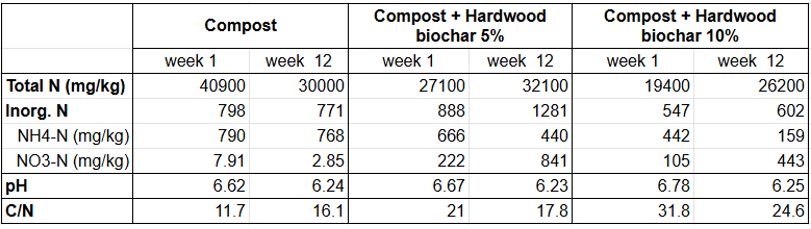
Table 1. Nitrogen dynamics of untreated compost (control) and hardwood biochar amended composts (5% and 10% biochar by mass) over time
Anaerobic Digestion of Slaughterhouse Waste
In parallel with composting research, we evaluated the anaerobic digestion potential of slaughterhouse waste (SHW) using 500mL bench-scale reactors (AMPTS II, BPC Instruments), which maintain controlled conditions and continuously measure methane production.
Four treatments were tested: (a) fresh cow manure (FCM), (b) FCM + ~1g SHW, (c) FCM + ~5g SHW, and (d) FCM + ~5g SHW + 1g hardwood biochar. All treatments were initially conducted in triplicate; however, due to leakage, the biochar-amended treatment is currently represented by a single replicate. The figure shows average cumulative biogas yield with standard deviation for the triplicate treatments.
Co-digestion with SHW increased biogas production compared to FCM alone. Both low (~10% VS) and high (~30% VS) SHW additions enhanced gas yield without evidence of inhibition, indicating that SHW is readily biodegradable under the tested conditions. Higher SHW loading resulted in substantially greater biogas production, highlighting its potential for energy recovery.
The biochar-amended treatment showed the highest biogas yield; however, this result should be interpreted cautiously due to limited replication. Follow-up experiments are currently underway, including triplicate trials for high SHW loading and a higher loading scenario (~15g SHW), with and without biochar.
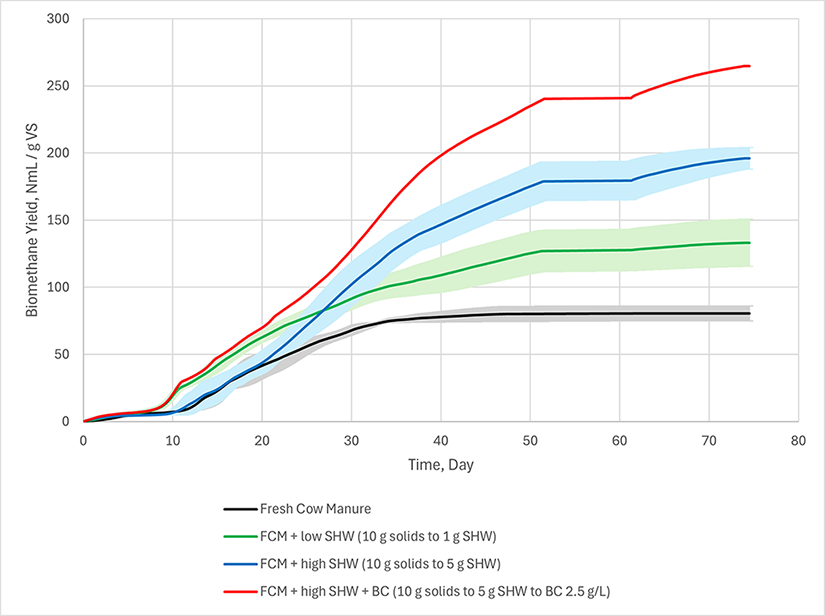
Figure 4. Cumulative biogas production over time from fresh cow manure (FCM) and co-digestion with slaughterhouse waste (SHW), with and without biochar. Shaded areas represent variability among replicates.
Community Biochar Workshop
Last autumn, Watauga Agricultural Extension collaborated with the Nexus team to host a community biochar workshop. The event attracted residents from a wide range of backgrounds including farmers, gardeners, small business owners (such as an artisanal chocolate maker), and retirees, reflecting strong community interest in biochar.
Participants gained hands-on experience producing biochar on-site using the “ring of fire” method and engaged in discussions on practical applications, including how to inoculate biochar with compost prior to soil application.
The Nexus team continues to partner with Watauga Agricultural Extension and Blue Ridge Women in Agriculture (BRWIA) to host biochar workshops on a regular basis. In addition, Watauga Agricultural Extension administers the “High Country Kiln Loan Program,” which lends Oregon kilns, fabricated as part of the Nexus project, to local residents and provides guidance for on-site biochar production.
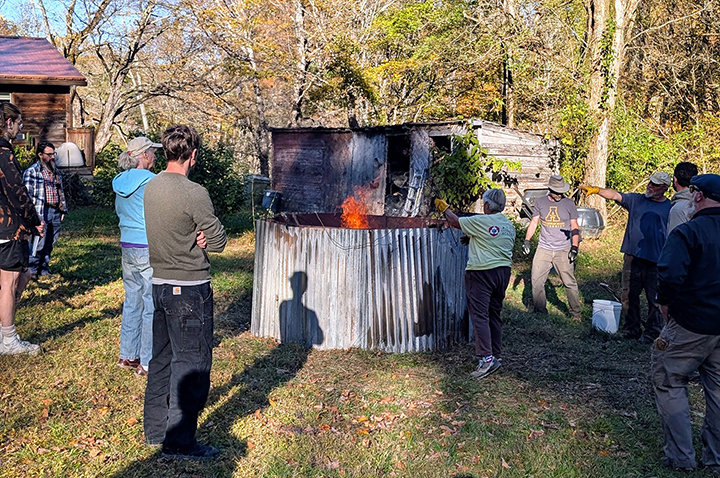
Figure 5. Community members gather around a “ring of fire” kiln to observe and participate in hands-on biochar production.