
Fall 2026 Nexus Project updates
STEPS Student Receives Grand Award at Appalachian Energy Summit
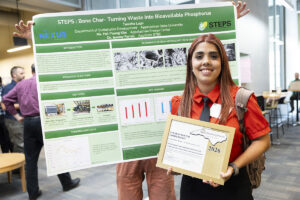
Image 1: Tanisha Lugo at the 2026 Appalachian Energy Summit
We are pleased to congratulate Tanisha Lugo on receiving the Grand Award in the Undergraduate group at the Appalachian Energy Summit Poster Competition in June 2026. Tanisha is a student researcher with the Science and Technologies for Phosphorus Sustainability (STEPS) Center, a research community that addresses the complex challenges in phosphorus sustainability by integrating disciplinary contributions across the physical, life, social, and economic sciences.
Tanisha presented her research, “STEPS: Bone Char – Turning Waste Into Bioavailable Phosphorus,” highlighting our ongoing efforts to explore bone char as a sustainable phosphorus source and its potential use in co-composting systems. Her project examines how pyrolysis temperature affects bone char properties and whether adding biochar during co-composting can enhance phosphorus availability.
Her findings showed that higher-temperature bone char showed greater porosity and higher phosphorus concentrations, while the biochar-amended compost treatment reached the highest temperatures during composting, suggesting increased microbial activity.
This recognition highlights the excellent work of our student researchers and the STEPS project’s efforts to advance waste-to-nutrient conversion and sustainable phosphorus cycling. Congratulations, Tanisha, on this well-deserved achievement!
REU Student Investigates Phosphorus Recovery from Bone Char Compost Tea
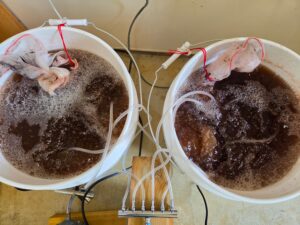
Image 2: Analyzing the benefits of compost tea to maximize phosphorus availability.
This summer Tyla Schmitz, a Research Experiences for Undergraduates (REU) student from Pacific Lutheran University, joined the STEPS research team at Appalachian State University to investigate whether intensive aeration could increase phosphorus availability from bone-char compost. Her project, “Phosphorus Availability in Bone Char Compost Tea,” explored compost tea as a potential approach for recovering plant-available phosphorus (P) from bone char during co-composting.
Using the Mehlich 3 method to measure plant-available phosphorus, Tyla found that 48-hour compost tea treatments produced a higher proportion of available P than the corresponding solid compost (20.4% vs. 16.0% of total P). Similarly, PSM-amended compost tea had a 2.6-percentage-point higher proportion of available P than PSM-amended solid compost.
The results suggest that intensive aeration may enhance phosphorus availability from bone-char compost, while also demonstrating that aeration time and microbial activity can influence P cycling. Interestingly, adding sugar during longer aeration resulted in lower extractable P, potentially because of temporary microbial P immobilization.
Tyla’s research provides a promising foundation for future field trials examining whether compost tea can improve plant phosphorus uptake and serve as an effective fertilizer treatment. She presented her work at the Summer Undergraduate Research and Creativity Symposium at NC State University this summer.
Nexus Bioenergy Lab Reopens Following EDH Renovation
After three years of waiting, the Nexus Bioenergy Lab has reopened in the newly renovated Edwin Duncan Hall, now located on the first floor. Before closing for renovation, the lab supported a range of lab-scale Nexus research projects, including student-led studies on bench-scale biochar anaerobic digestion, controlled indoor growing systems, and biogas cleaning.
The renovated lab will build on this research foundation while expanding its role in supporting the Nexus team’s ongoing biochar and bone char co-composting research. A key focus will be nutrient analysis, particularly the measurement of plant-available phosphorus, to better understand how these materials can contribute to nutrient recovery and sustainable agricultural practices.
With its renewed facilities and expanded analytical capabilities, the Nexus Bioenergy Lab will continue to support hands-on, student-driven research and advance Nexus’s work in bioenergy, waste-to-resource conversion, and sustainable nutrient cycling.
Year 2 Corn Field Trial Completed
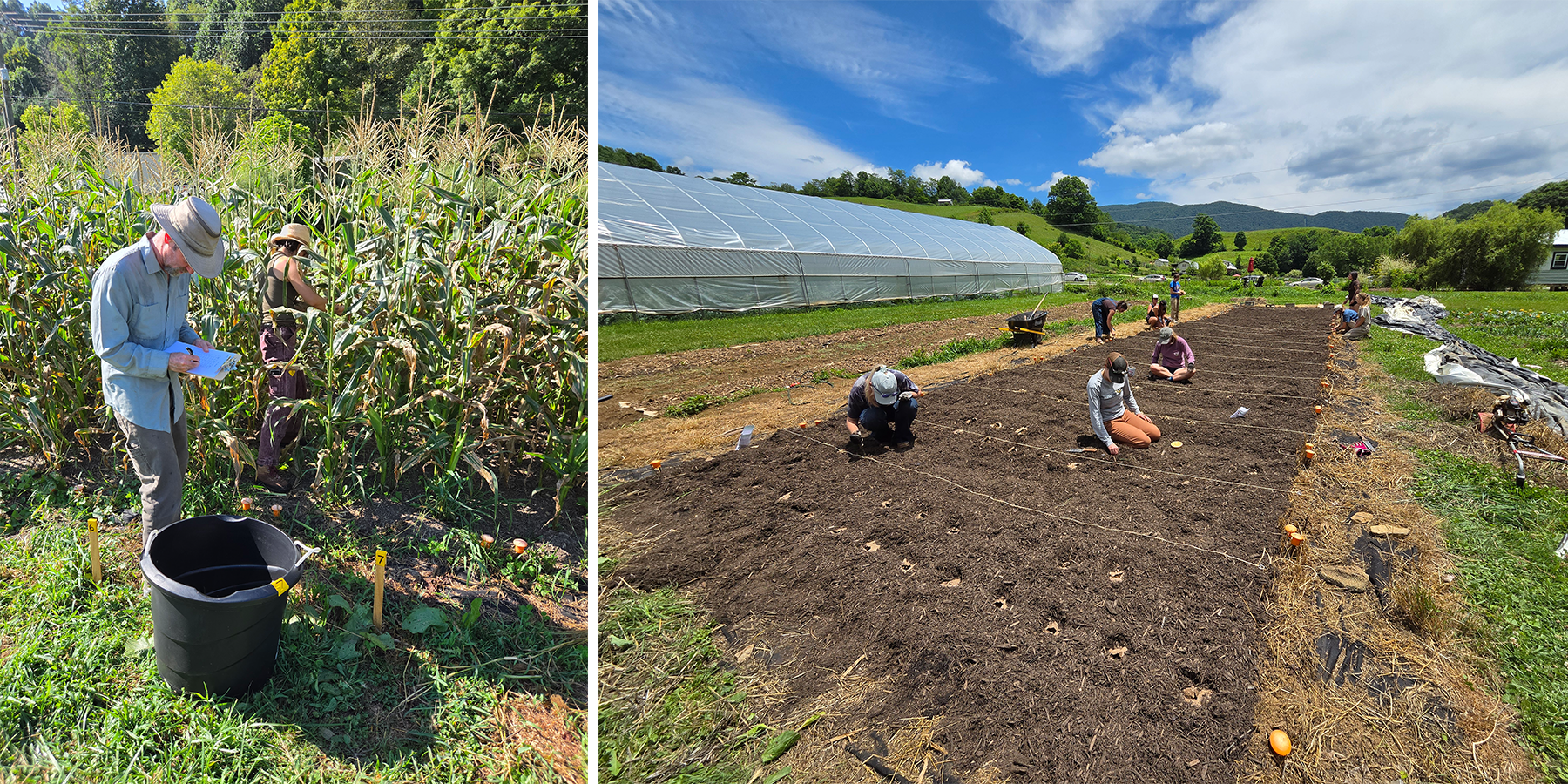
Image 3: Corn field trials in 2026 (L); cover crop planting in 2025 (R)
The Nexus team completed the second year of its corn field trials at Kornecopia Farm, building on the first year of research evaluating compost and biochar-based soil amendments. Following the first harvest in 2025, a cover crop mixture of winter wheat, crimson clover, and tillage radish was planted to support soil health and nutrient cycling. In 2026, corn was planted and harvested again to continue evaluating the effects of these treatments on crop yield and soil nutrient dynamics.